

Gasoline and diesel markets remain sensitive to overseas supply concerns, especially the ongoing conflict involving Iran and the United States and the continued risk to shipping routes through the Strait of Hormuz and the Red Sea. These waterways are important for global crude oil and refined fuel movement, so any disruption can quickly add a risk premium to fuel prices.
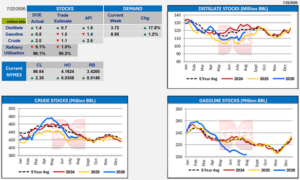
For gasoline customers, prices have been supported by summer driving demand and tighter fuel inventories. Gasoline supplies were expected to decline, and preliminary reports showed gasoline stocks moving lower, which points to steady seasonal consumption. Even so, gasoline has not been as strong as diesel because the market is also weighing signs of improving global crude supply and the possibility of weaker demand in some parts of the world.
Diesel remains the stronger side of the fuel market. Distillate inventories, which include diesel, have shown signs of building, but diesel prices have continued to hold firm because global refining capacity is tight and transportation risks remain elevated. Diesel is also more exposed to global freight, agriculture, construction, and industrial demand, which can keep prices supported even when crude or gasoline soften.
Crude oil markets are being pulled in two directions. On one side, geopolitical risk is keeping traders cautious, especially with attacks affecting Middle East shipping and Black Sea export routes. On the other side, emergency oil reserves, higher expected global production, and signs of improving flows through key shipping lanes are helping limit some of the upside pressure.
Market Outlook
The near-term outlook remains choppy. Gasoline and diesel prices could move higher quickly if shipping disruptions worsen, if the Strait of Hormuz or Red Sea routes become more restricted, or if refinery issues tighten product supply. Diesel may continue to carry the most upside risk because of tight global product markets and its importance to freight and commercial demand.
At the same time, the market does have some downside pressure. The U.S. Energy Information Administration expects improved global oil production and recovering trade flows to ease crude oil prices later this year, while emergency reserves remain available if supply risks become more severe. If diplomatic progress improves and shipping lanes stay open, crude oil could soften and eventually help gasoline prices ease.
For customers, the best expectation is continued volatility rather than a straight move in one direction. Gasoline should remain tied closely to summer demand and crude oil movement, while diesel may stay more supported due to refining constraints and global transportation needs. If you have near-term fuel needs, it may be worth staying in close contact and watching for buying opportunities on pullbacks rather than assuming prices will fall steadily.
If you have any questions or would like current pricing, please contact your Energy Account Manager.
Propane
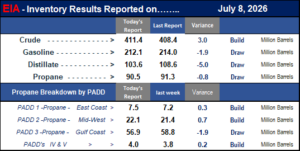
Propane inventories moved sharply higher this week, increasing by 6.3 million barrels. Supplies are now running 34% above the five-year average for this time of year and are 21.2% higher than last year. That means the overall supply picture remains very comfortable heading into the second half of summer.
Most of the weekly build came from the Gulf Coast, where inventories increased by 5.7 million barrels. The Midwest also added 600,000 barrels, while the East Coast saw a small draw of 300,000 barrels. Other regions added roughly 200,000 barrels combined.
Propane stood out from the rest of the market this week because the inventory build was much larger than expected. The reported increase was roughly three times the average industry estimate. A key reason was weaker demand: U.S. propane exports dropped to their lowest level since July 2025, and domestic demand was about 25% below normal seasonal levels.
Market outlook
With inventories building quickly and supply levels well above normal, the propane market appears well supplied for now. This could help keep price pressure limited in the near term, especially if exports and domestic demand remain soft. However, the size of this week’s build was unusually large, so the market may see a smaller or corrective inventory number next week. Customers should continue to watch demand trends, export activity, and early fall weather patterns, as those will likely guide price direction heading into the heating season.
If you have any questions or would like current pricing, please contact your Energy Account Manager.
NuWay-K&H Cooperative Customer Portal
Through our portal, you can check billing, make payments, request a quote, check previous years product usage, see invoices and statements, and much more. We also offer digital contracting through the portal where you can sign and pay your energy contracts through our mobile app or desktop site. Click the button below to log in!