
Crude oil prices have eased after recent U.S.–Iran talks helped reduce immediate fears of a major supply disruption through the Strait of Hormuz. The market had added a risk premium when tensions were high, but that premium has started to come out as tanker movement improves and temporary sanctions relief allows more Iranian oil and petroleum products to move into the market.
Additional supply is also coming from other producers, including Iraq and Gulf countries, which is adding pressure to crude prices. However, the recovery is still fragile. Shipping, insurance, logistics, and regional security issues could slow the return of supply, and any renewed conflict in the Middle East could quickly push prices higher again.
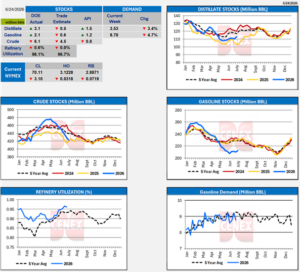
For gas and diesel customers, refined products remain more supported than crude oil. U.S. refineries are running at very high seasonal rates, but inventories are still tight. Gasoline stocks are below normal for this time of year, and distillate inventories, which include diesel, are even tighter. This means diesel prices may not fall as quickly as crude oil, especially if there are refinery outages, logistics problems, or stronger-than-expected demand.
The Strategic Petroleum Reserve and commercial crude inventories also remain historically low, which limits how far prices may fall if demand stays steady. Even though the crude market has turned softer in the short term, the physical supply picture for refined fuels remains tight enough to keep volatility in place.
Market Outlook
Near term, crude oil may remain under pressure if diplomacy continues to hold and more supply reaches the market. That could help ease some upward pressure on gasoline and diesel. However, customers should not expect a smooth move lower. Product inventories are still tight, refinery utilization is already high, and Middle East headlines remain a major risk.
Gasoline prices will likely continue to follow summer driving demand closely, while diesel remains the more sensitive product because distillate inventories are well below average. If supply continues to normalize and no new disruptions occur, prices could soften gradually. If tensions flare up again or refineries experience outages, diesel and gasoline could move higher quickly.
Overall, the market tone is a little more bearish for crude oil than it was recently, but refined fuels remain supported. For buyers, this is a market to watch closely. Current conditions suggest some downside potential, but the combination of tight inventories and geopolitical uncertainty means price swings are still likely.
If you have any questions or would like current pricing, please contact your Energy Account Manager.
Propane
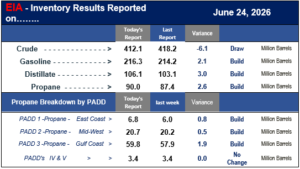
Propane inventories continued to build this week, with the EIA reporting a 2.618-million-barrel increase in U.S. stocks. Total propane inventories now stand at 90.047 million barrels, which is close to market expectations and near the recent five-year average for this time of year.
The increase in propane supply was mainly tied to softer domestic demand, which came in at 586,000 barrels per day. Exports remained strong at just over 2.0 million barrels per day, but current U.S. demand has not been strong enough to keep inventories from growing.
For propane buyers, the report suggests the market remains well supplied, heading through the summer months. Exports increased by 31,000 barrels per day, imports increased by 20,000 barrels per day, production slipped by 21,000 barrels per day, and domestic demand improved slightly by 18,000 barrels per day compared with the previous report.
Outside of propane, crude oil inventories moved lower while gasoline and distillate stocks increased. These broader energy market changes are worth watching, but propane-specific fundamentals continue to point toward adequate supply for now.
Market Outlook
The near-term propane outlook leans steady to slightly softer based on the current inventory build and moderate domestic demand. With stocks near the five-year average and supply continuing to build, there does not appear to be immediate upward pressure from propane inventories alone. However, strong export activity remains an important factor, and any sustained increase in exports, production disruptions, or stronger late-summer demand could tighten the market more quickly.
For customers, this is a good time to stay in regular contact with your supplier and review fall and winter propane needs. Current supply levels are comfortable, but weather, crop drying demand, export movement, and crude oil price direction can all influence propane prices as we move closer to the heating season.
If you have any questions or would like current pricing, please contact your Energy Account Manager.
NuWay-K&H Cooperative Customer Portal
Through our portal, you can check billing, make payments, request a quote, check previous years’ product usage, see invoices and statements, and much more. We also offer digital contracting through the portal, where you can sign and pay your energy contracts through our mobile app or desktop site. Click the button below to log in!